
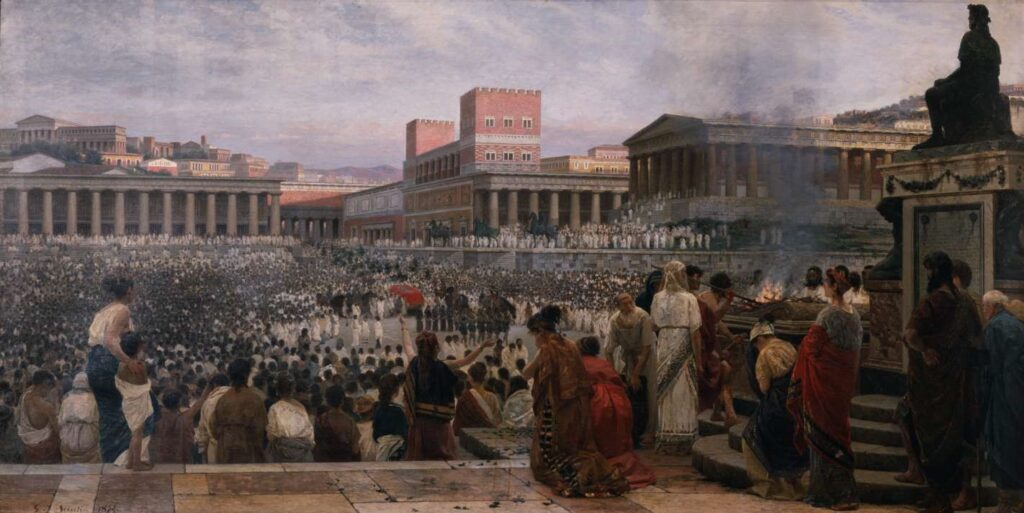
Giuseppe Sciuti, I Funerali di Timoleonte, 1874, oil on canvas
The first purchases of exceptional works such as I funerali di Timoleonte by Giuseppe Sciuti, an example of neo-Pompeian and realist painting with grandiose scenographic and architectural settings, are linked to this historical-pedagogical vision. We observe a magnificent open space, crowded by the people who, composed and quiet, attend the solemn funerals for Timoleon, the wise Corinthian hero who in 344 BC. he had freed Syracuse from the tyranny of Dionysius the Younger, guaranteeing the city a period of peace and prosperity. Hero who, from South America, had gone to Sicily, like Garibaldi, to defeat the tyranny of the Bourbons.
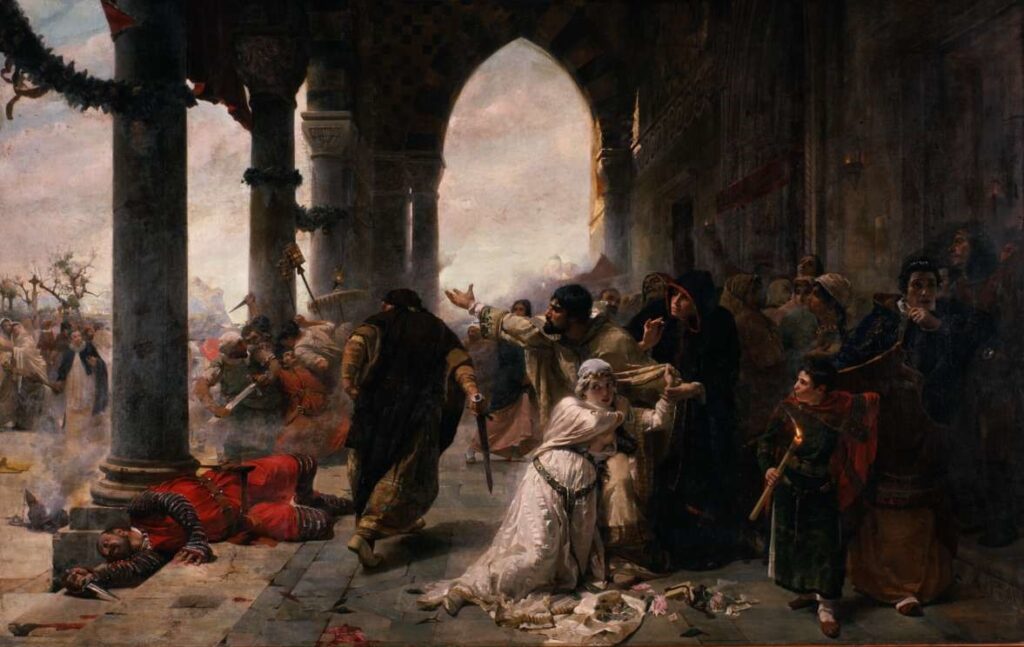
Erulo Eroli, I Vespri Siciliani, 1890-1891, oil on canvas
A reference to this story of liberation from the oppressor can also be found in the vast canvas by the Roman Erulo Eroli, whose theme – already addressed by Hayez – is represented with bold and theatrical realism. The young Sicilian woman outraged by the French soldier Droetto on 31 March 1282 is the episode that triggered the popular insurrection and therefore the expulsion of the Angevins.
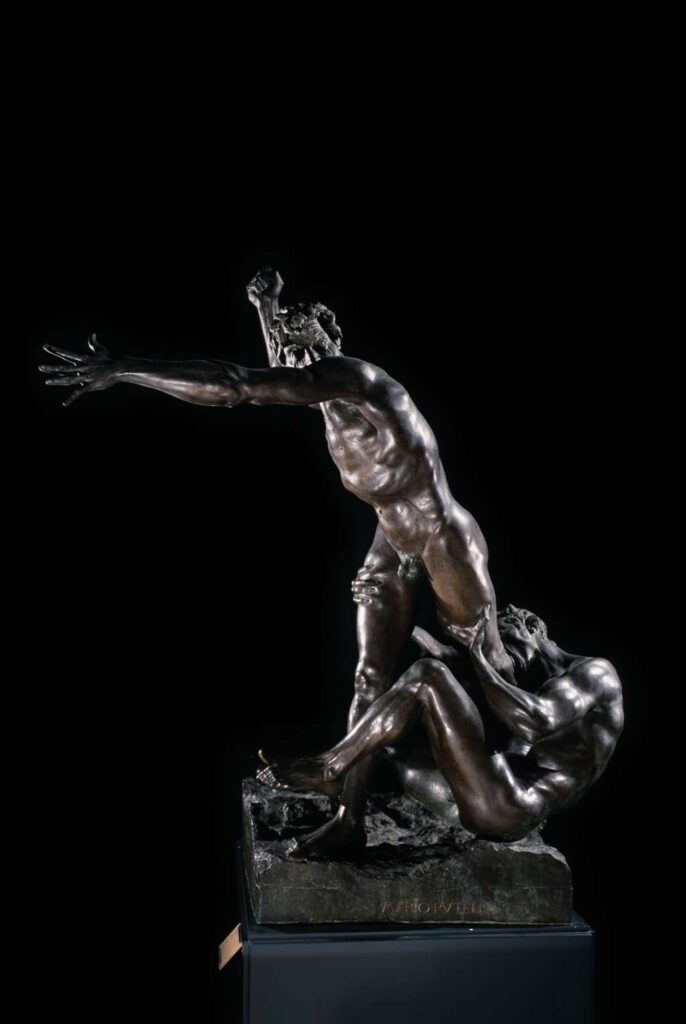
Mario Rutelli, Gli Iracondi, 1910 ca., bronze
Among the acquisitions of the first nucleus, two exceptional sculptures stand out: in the first place, a work that has represented a symbol of the Gallery since the very beginning and a source of pride for the city of Palermo, namely the bronze group of Gli iracondi by Mario Rutelli from Palermo. Characterized by the energy of the modeling and the strong experimentalism of Bernini’s matrix, it was purchased in 1910 by the Palermo museum. We are in the seventh canto of Dante Alighieri’s Inferno, in the circle in which souls in the throes of violent anger are found, condemned to remain immersed in the mud and to beat each other until they tear each other to pieces. And this is exactly how Mario Rutelli represents them to us, with the intensity of anger enclosed in the tense muscles of the two characters, in the bite of one and in the fist of the other, in an endless struggle.
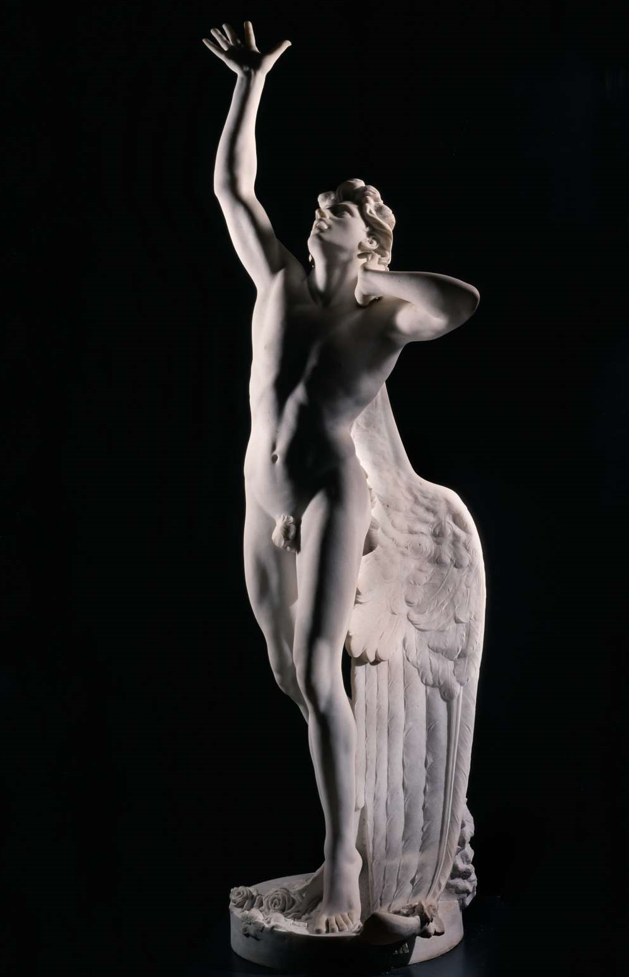
De Lisi, L’angelo di Moore (Cherubino di Moore), 1925, marble
The sculpture of Moore’s Angel, a marble work in 1925 by Domenico Delisi, based on the plaster model completed by his father Benedetto in January 1875, has an opposite tenor. The slender body of this angel in the grip of to the pain, anxiety, and frustration of overwhelming helplessness. This angel is linked to the poem by the Irishman Thomas Moore, brotherly friend of Byron, The Loves of the Angels (known in Italy in the famous translation by Andrea Maffei of 1836). The protagonist is the angel Rubi who fell in love with an earthly girl and revealed to her the secrets of her flight. As punishment he was cast out of the sky, unable to fly due to wings of stone. Wings that the sculptor represents us in a poignant way.