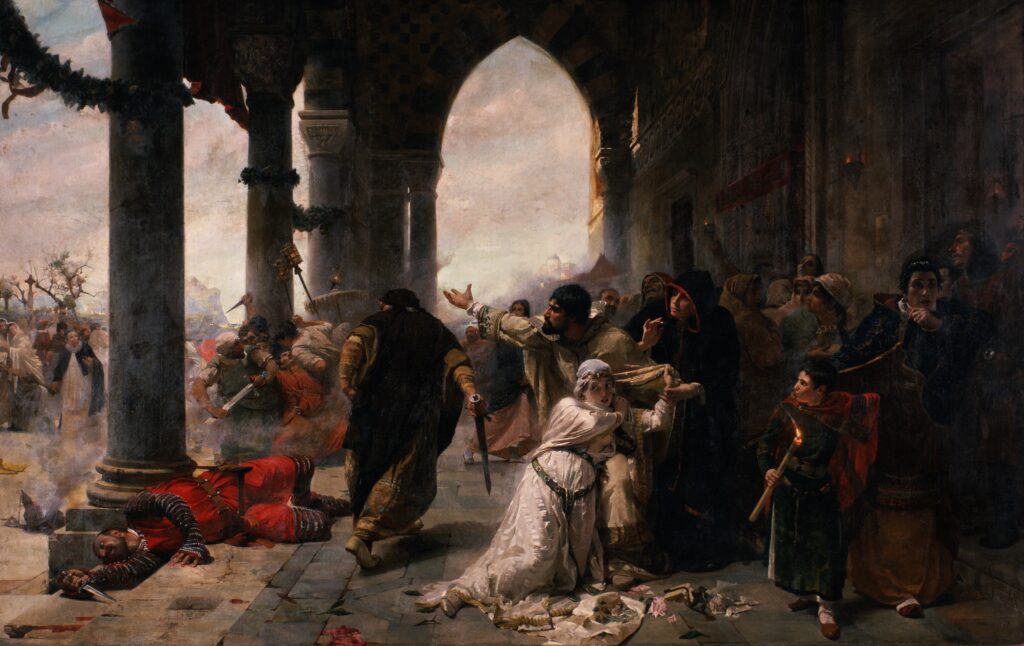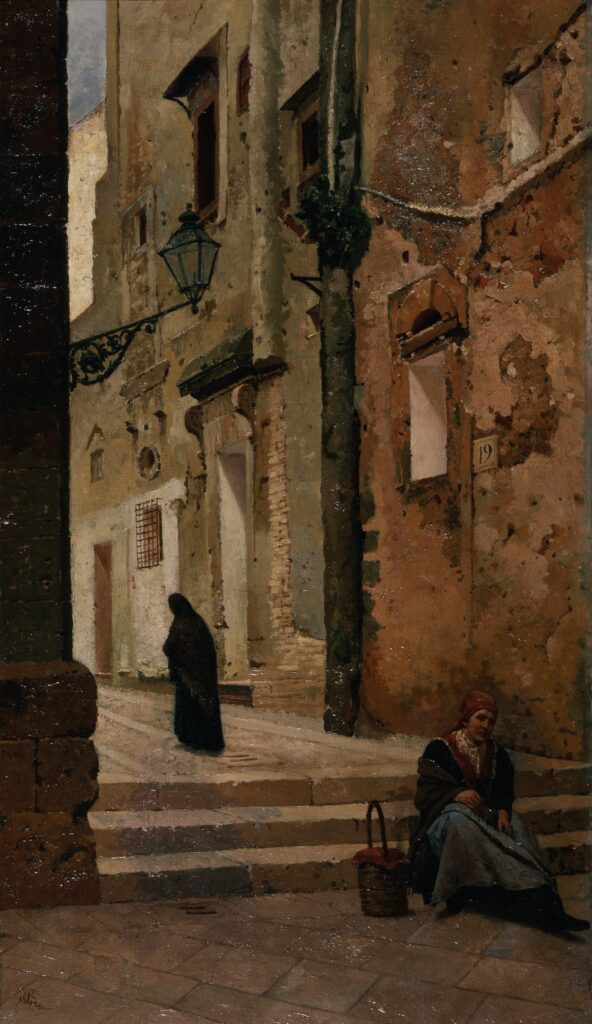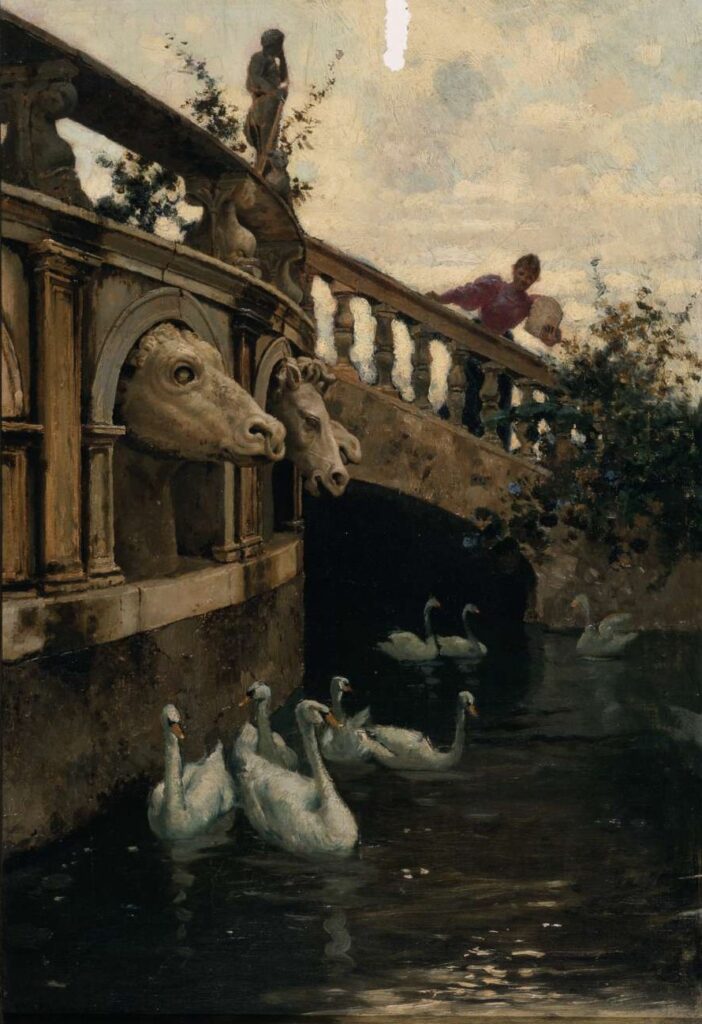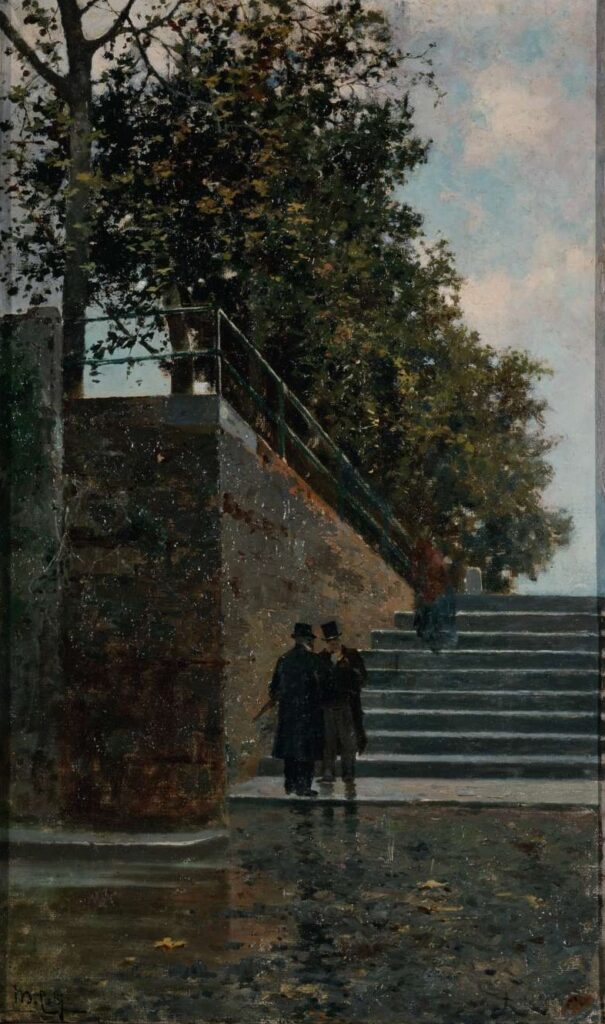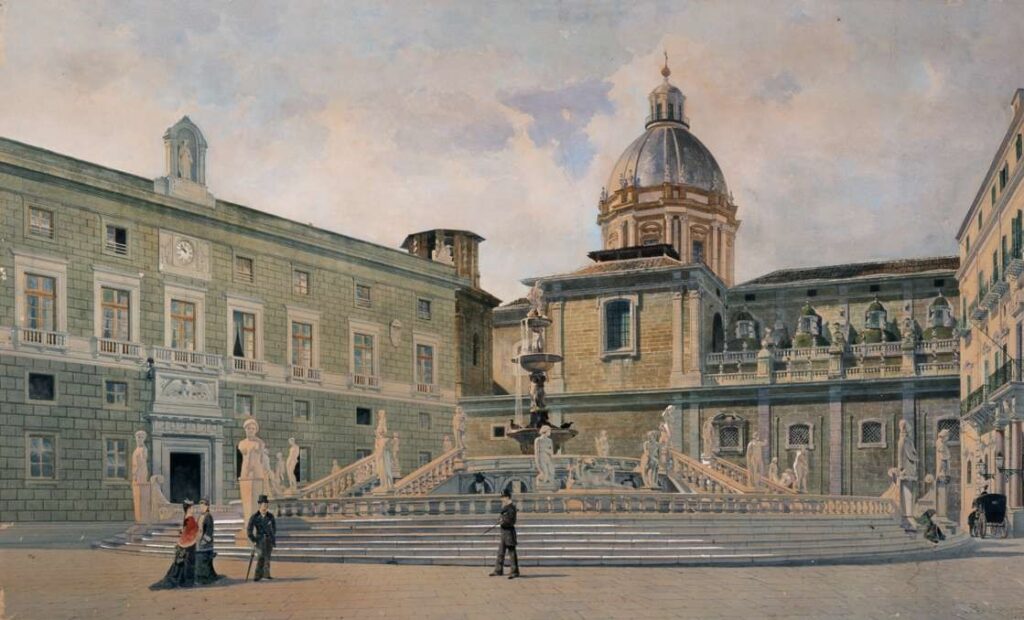
The GAM collection bears witness to the perception of an era and documents the themes studied by the artists as interpreters. Among these, an important role was played by the image of the city of Palermo, in the wake of the Grand Tour which – through the representations of its travelers – influenced the local tradition of landscape painting. The works enhance the enchanting beauty of the natural environment between the mountains and the sea of the city. Furthermore, starting from the thirties of the nineteenth century, in conjunction with the rediscovery of medieval Sicilian architecture in the studies, the interest in these themes was translated pictorially in the choice to represent a series of glimpses of the monuments of Palermo from the Arab-Norman era . Both the vedutisti and the landscape painters depicted Palermo from different points of view, fully entering the imagination of the city. From the south, i.e. from the slopes of Monte Grifone, from the area of the Franciscan convent of Santa Maria di Gesù and from the beach of Romagnolo – Acqua dei Corsari; from the mountains behind it, near Monreale, Boccadifalco and Monte Billiemi; and finally, they portrayed Palermo seen from Monte Pellegrino, the most characterizing natural element, a landmark that itself becomes the symbol of the city. In this series, we discover how the painters of the GAM, including – among others – Erulo Eroli, Francesco Lojacono, Michele Catti, have described Palermo and its territory, but also its history, through different methods of pictorial language and interior of different pictorial genres.