
Experimentation is a typical trait of the works of this artist from Monreale, of a lively, curious and restless nature, who was fascinated by the works of his contemporary Francesco Lojacono. For his training he had the opportunity to travel a lot and to go to Naples, to the Scuola di Resina, and to Florence, where the Macchiaioli worked.
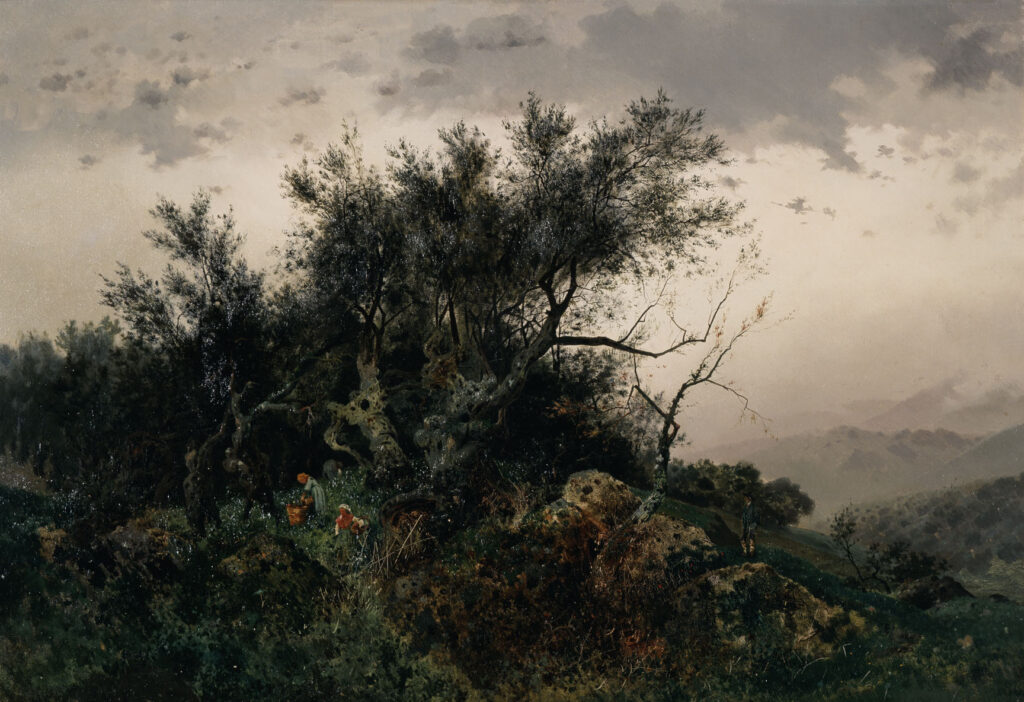
Antonino Leto, La raccolta delle olive, 1874, oil on canvas
The work that expresses his vision is The Olive Harvest (1874), a landscape that seems to have been photographed from life. In this picture the artist shows his talent and his ability by winning the competition for the pensioner in Rome.
Antonino Leto reworked the suggestions of the artists he encountered during his studies in a very original way and brought the exuberant Mediterranean radiance into his works with attention to light and color, very evident in the Capri settings. Capri was precisely the island-refuge where the artist rediscovered the pleasure of a free and experimental painting, in which to bring out the expressive power of color and light. A way to enhance the beauty of Mediterranean nature.
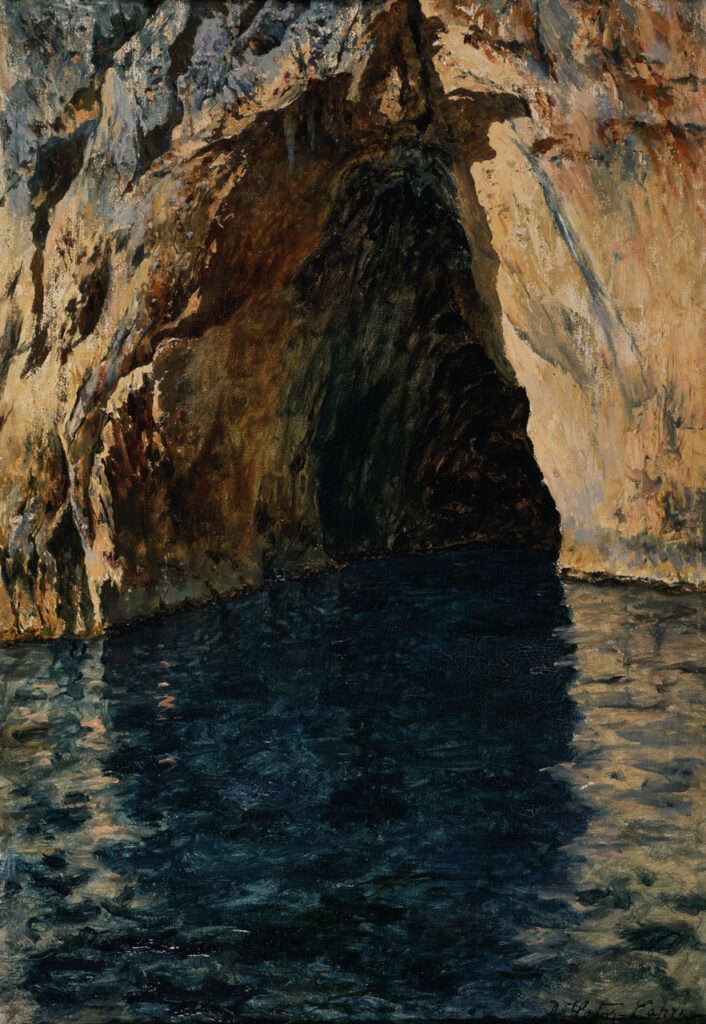
Antonino Leto, Grotta rossa, 1882 ca, oil on canvas
The mysterious and uncontaminated nature appears as a poetic vision in the work Grotta rossa, where the waters of the sea look like “slabs of emeralds and sapphires”.