
The sculpture of the twentieth century is present with two great protagonists of the century, Emilio Greco and Pietro Consagra. The first, who studied self-taught and moved to Rome, started out in sculpture with attention to naturalism and archaism also in the wake of echoes of Etruscan and Roman models.
In the Head (1937) with the strong roundness of the skull, the Catania sculptor is attentive to sobriety and volumes that are barely scratched by thin strokes.
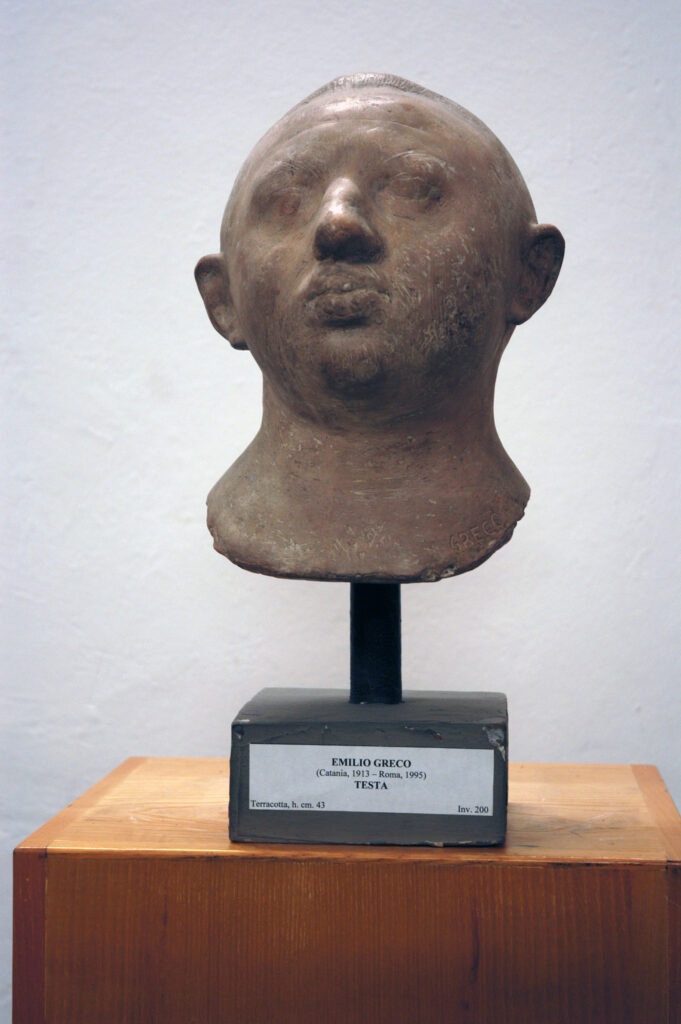
Emilio Greco, Testa, 1987, earthenware
Pietro Consagra is a great innovator of the language of twentieth-century sculpture: the artist donates the Oracle of the Chelsea Hotel on the occasion of an anthological exhibition dedicated to him, a work that expresses space understood as an “existential dimension”, in which the choice of frontality as “anti-celebration, plain and conversational reading, valorisation of the sign against the mass, of the surface against the depth, of the material against the form”.
The production of Tommaso Bertolino also appears in the sign of the contemporary, who in L’acino acerbo (my model) (1929) shows a delicate little girl who depicts potential fertility, which is about to blossom, with a reference to peasant symbolism.
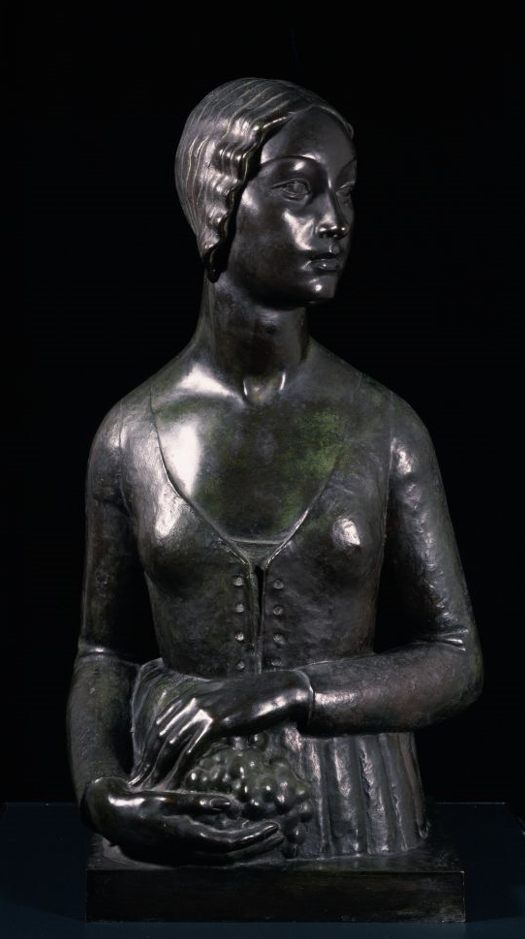
Tommaso Bertolino, L’acino acerbo (La mia modellina), 1929, bronze
The work of Antonio Ugo from the 1930s, La contadina, also brings back to the peasant world, an example of the mature production of this sculptor, who in this period dedicated himself to themes such as motherhood and the Madonna, such as the Madonna of the lamb, which encourages the little son to give his frond to the tender lamb. A face that wanted to tell an “ideal island feminine beauty” while the “half-closed eyelids in a dreamy nebulosity” gave the figure “the sorrowful pensiveness of the humble people of Sicily”.
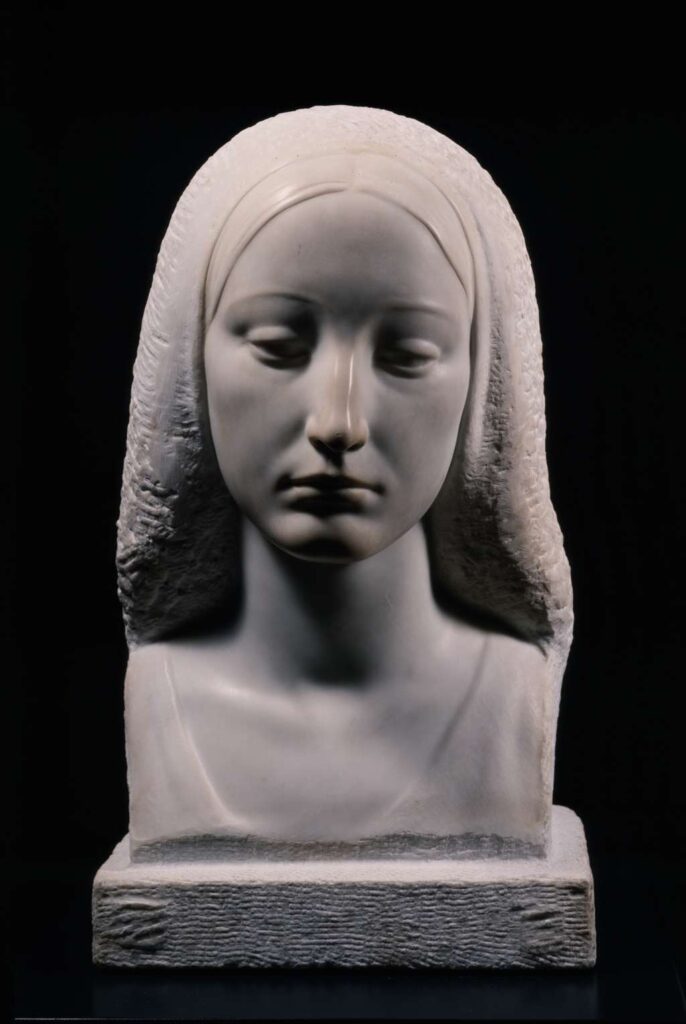
Antonio Ugo, Contadina siciliana, 1932, Marble
Also noteworthy are the works of Giovanni Barbera, an artist member of the Group of Four Renato Guttuso, Lia Pasqualino Noto and Nino Franchina, who died at a young age. From the beginning of the thirties, Barbera produced works in terracotta and wax, characterized by a marked primitivism with a lyrical component in which the rough surfaces come alive due to the effect of light on the material. His Adolescente (1932-1934) and Seated Woman (1935) close the path of the twentieth century in Sicily.
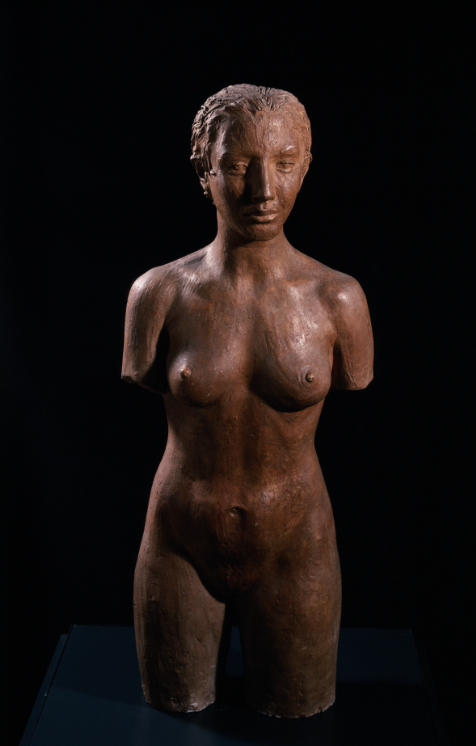
Giovanni Barbera, Adolescente, 1932-1934, earthenware