
At the end of the First World War, the experimental enthusiasms of the avant-gardes were long gone; the reference to reality and concreteness translated into a recovery of Italian classicism – promoted by artists such as De Chirico, Savinio, Soffici and Carrà – as the basis for a national tradition that was rooted in universal values. In fact, Mario Sironi – an exponent of the Novecento movement protected by Margherita Sarfatti – takes his cue from these premises of classicism.
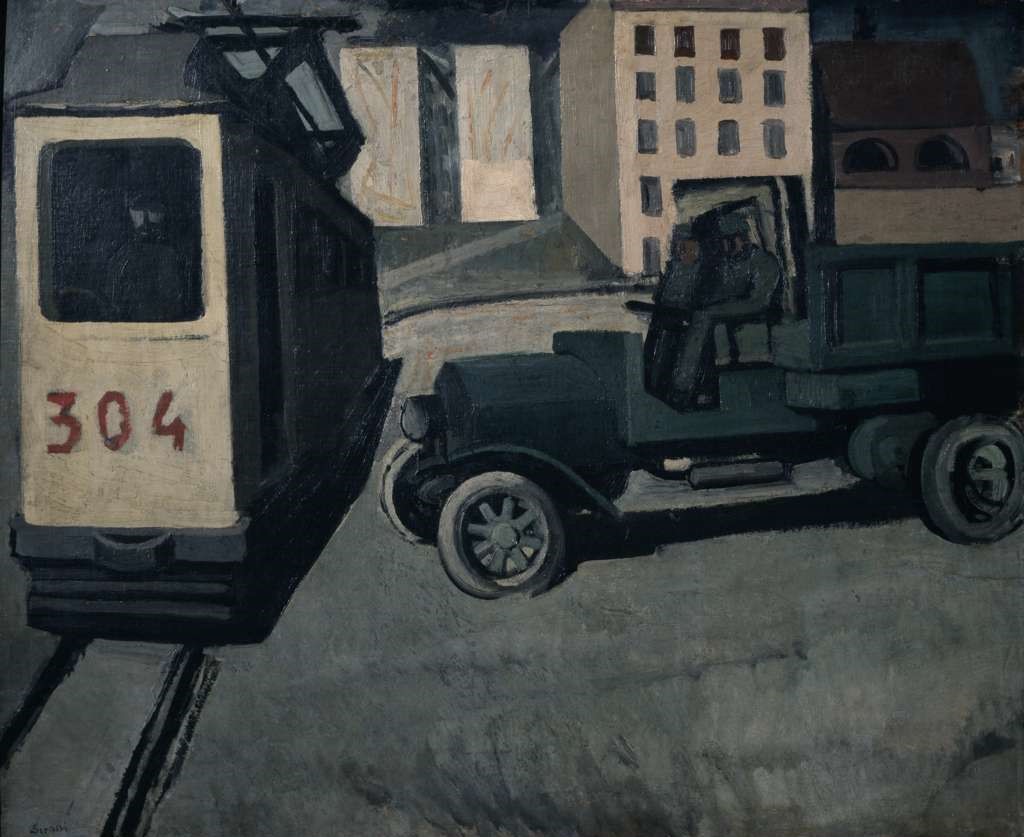
In Il tram (1920) Sironi combines classicism with contemporary reality tinged with a subtle restlessness. He shows us a metropolitan and industrial reality, underlined by the bare square volumes of the buildings, in a landscape devoid of any natural element. The range of colors is homogeneous and the only human figures are two soldiers on a vehicle and the tram driver who, with tram 304, advances towards the viewer; of this, he is unable to see the face – in shadow – arousing a strong feeling of unease.
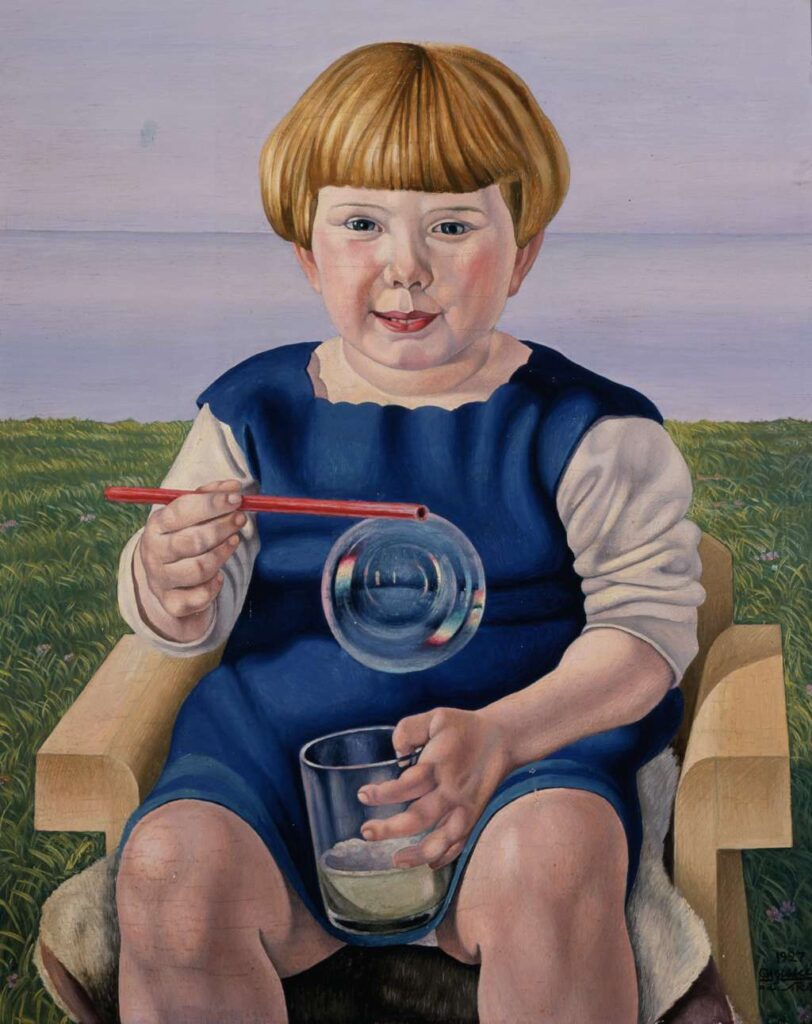
The very pure optical definition of Cagnaccio di San Pietro fits right into the wake of the great Italian drawing tradition, presenting us with a glazed and almost “hyper-realistic” painting in Bolla di soap (1927) in which a child figure sitting on a small armchair holds hand a glass and in the other a straw with which he made a soap bubble; a cultured and ancient theme, that of the “bulla” present in art, which refers to the fragility of earthly life.
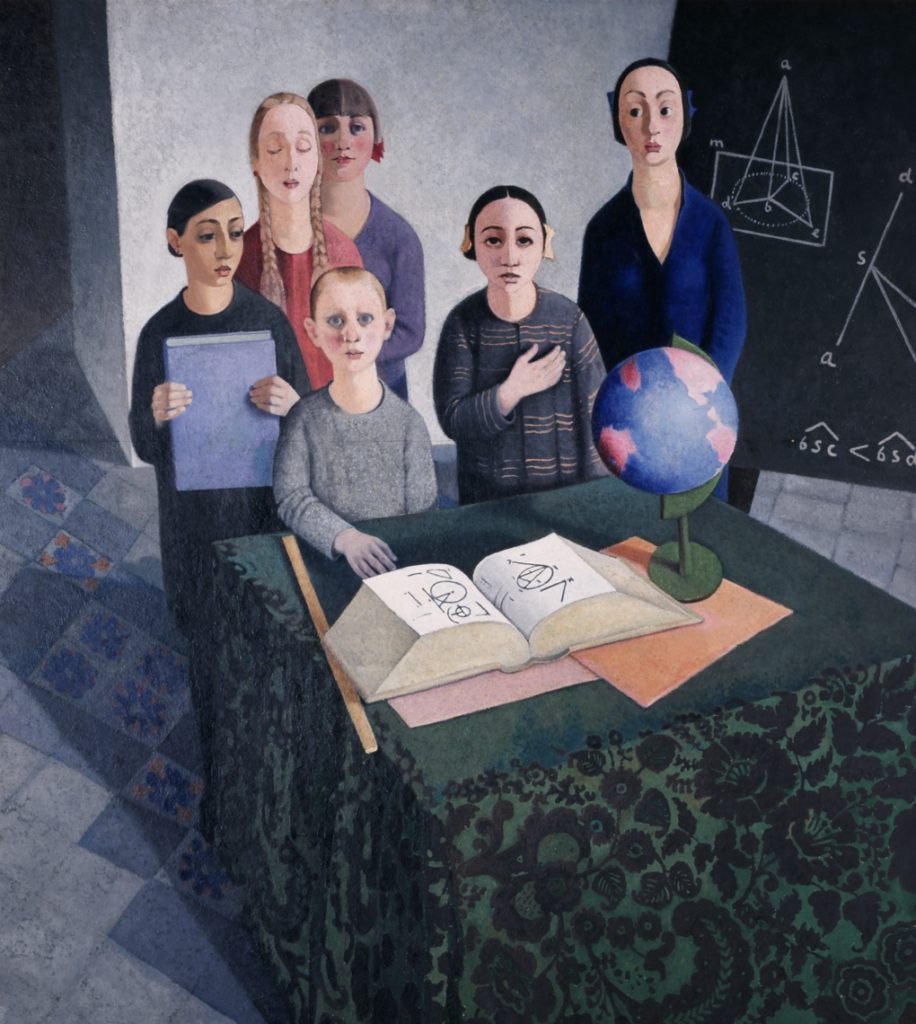
The protagonists of Gli Scolari (1927-1928) by Felice Casorati, an artist exponent of Magical Realism, evoke the figures of Piero della Francesca’s paintings full of sacredness. This exceptional work is inspired by the artist’s personal teaching experience, which creates a perspective framing that scans the space in depth and, together with the compact and uniform application of the colors, determines the austere character of the scene and its protagonists.
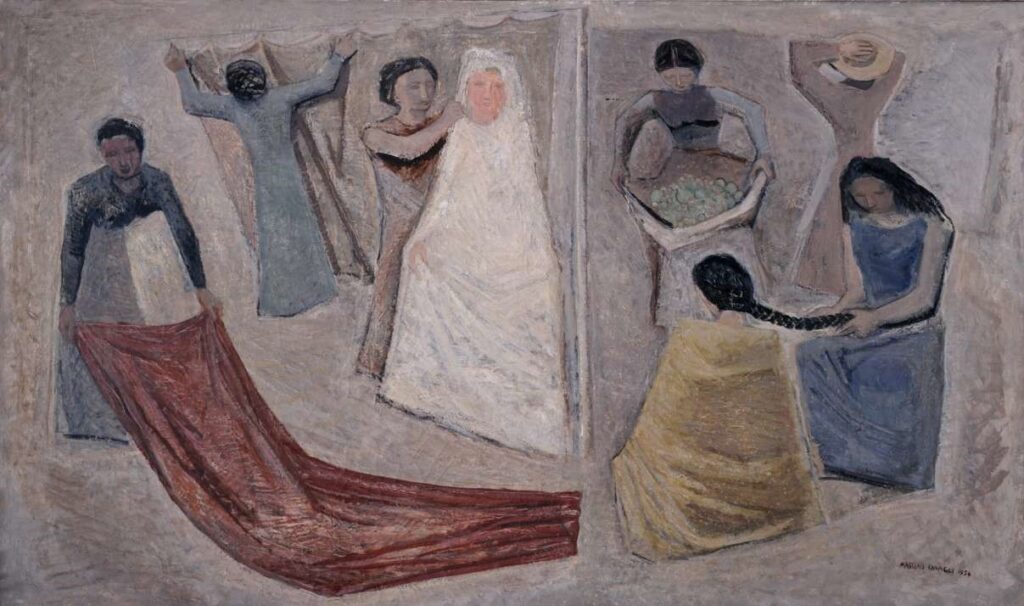
Massimo Campigli in Le nozze (1934) – against a background created by dense spatula strokes – describes a scene that takes place in an abstract space. The women, arranged around the bride placed in the center – in a frontal, hieratic, very white position – are grappling with the preparations for the party. These female figures, in addition to evoking an archaism linked to ancient cultures, have an hourglass silhouette.
The Roman School is present in this section with works by artists such as the Syracusan Francesco Trombadori and Fausto Pirandello. The first artist with Nude Girl (1934) evokes a timeless dimension with a flavor of antiquity (such as the Venus Landolina of the Archaeological Museum of Syracuse), also recalling a part of the great nineteenth-century European painting (such as Courbet). To these suggestions, he adds a modern use of tonal contrasts (in the center the white of the shoulder against the green of the tree and on the right side the gradation of gray from light to dark).
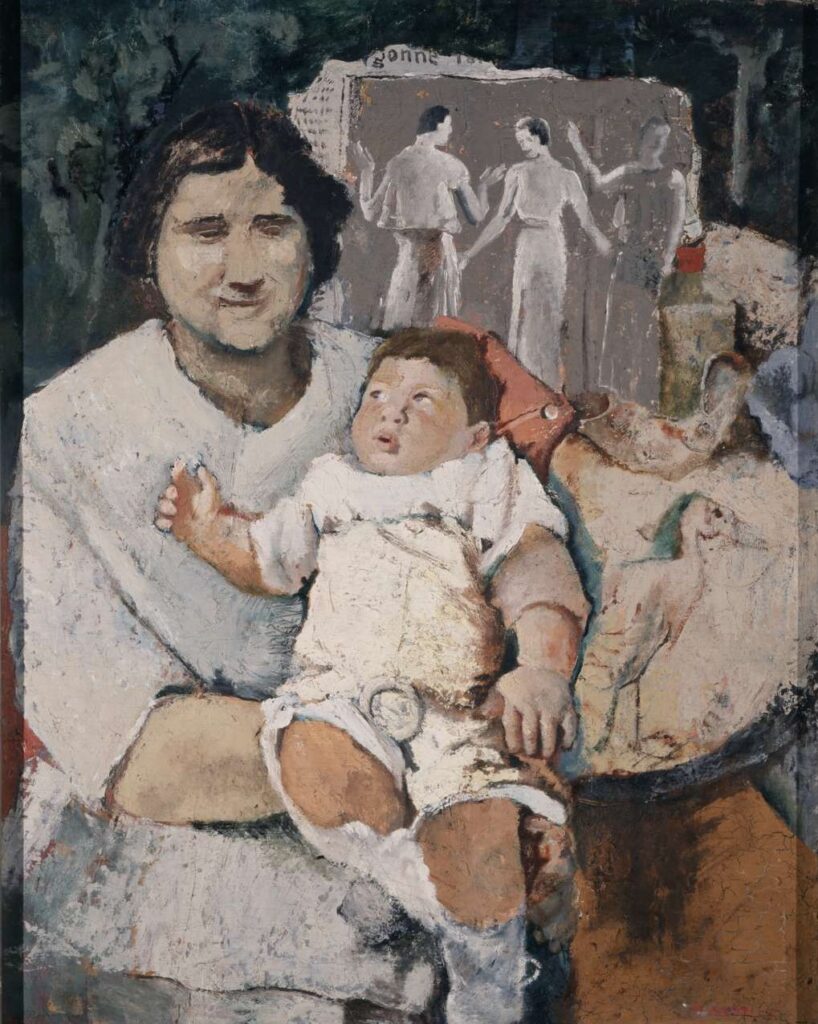
The influence of the Roman school in Fausto Pirandello can be seen in the work Maternity – Moses saved (1934) where he shows a mother with her baby of a few months, whose models were his wife Pompilia and her newborn son Pierluigi. The human figures are massive and the color is mellow. The work already echoes the biblical world in the title, wanting to tell the everyday dimension as archaic, remote and current.
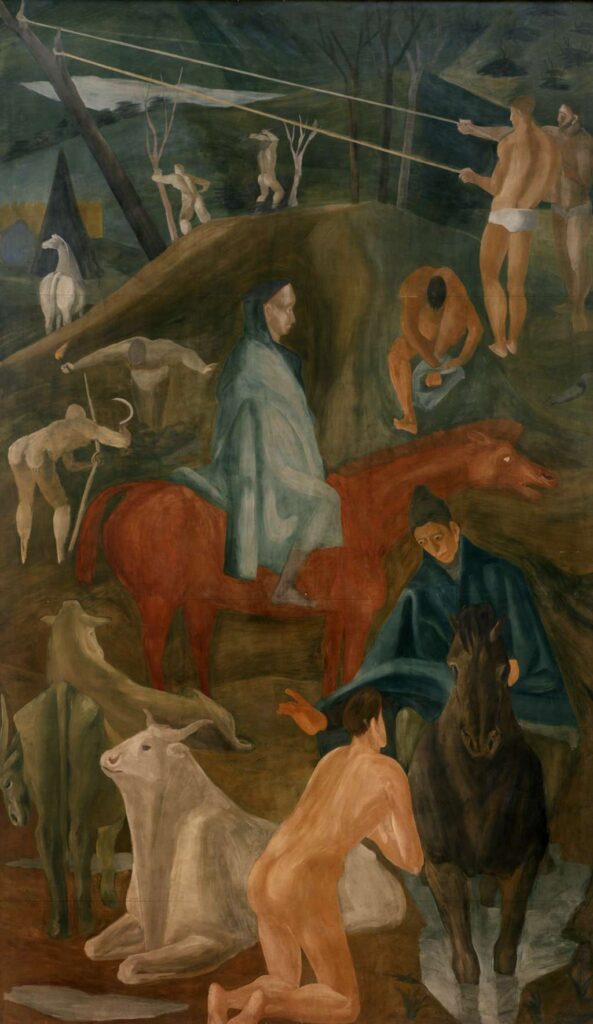
In the final part of this section – chronologically close to the tragic destiny of world war – we find the restless experiments of Corrado Cagli and the feverish brushstroke of Renato Guttuso.
The first, in Cronache del Tempo, caused a sensation with its large panels painted in encaustic, which referred to Mussolini’s recent reclamation efforts in the Roman countryside and had Masaccio and Piero della Francesca as pictorial references, removing force from perspective and inserting real objects in an abstract atmosphere.
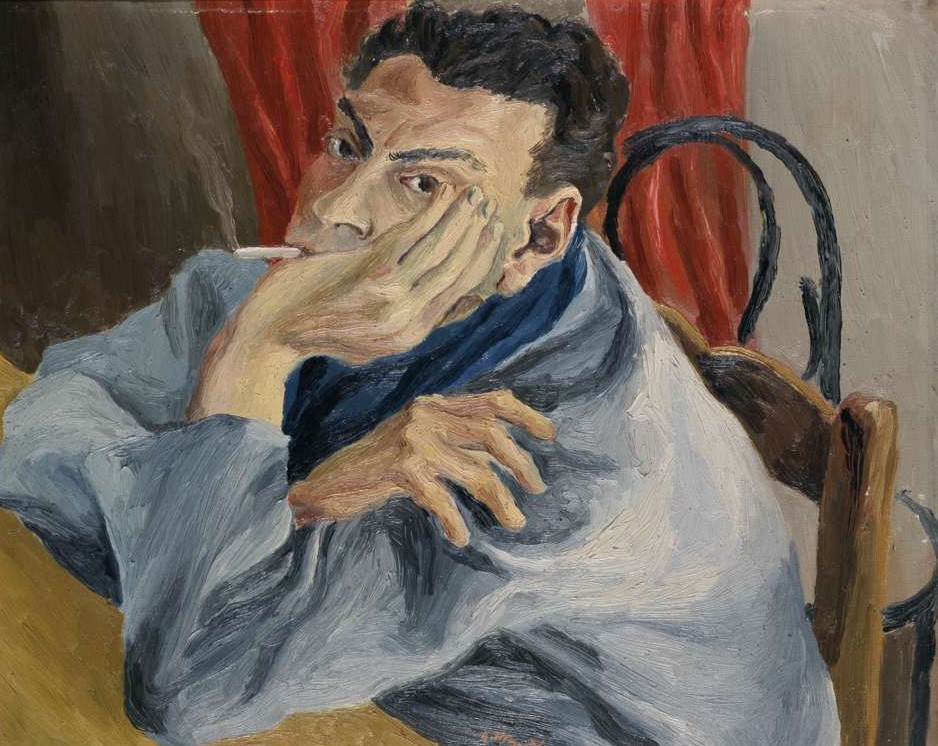
The second, active from a very young age with the Group of Four, in his Self-Portrait (1936), portrays himself from a close-up and crooked perspective in a pose of inactivity, in a melancholic attitude, emphasized by the fact that his head rests on his left hand. A crooked cigarette hangs from his mouth, but despite the attitude that emerges from his position, his eyes are attentive and lively, just as the brushstroke is nervous and impetuous, transmitting profound aspects of his mood and personality of the young artist.