
Historical-literary themes are widely represented in the works of the GAM.
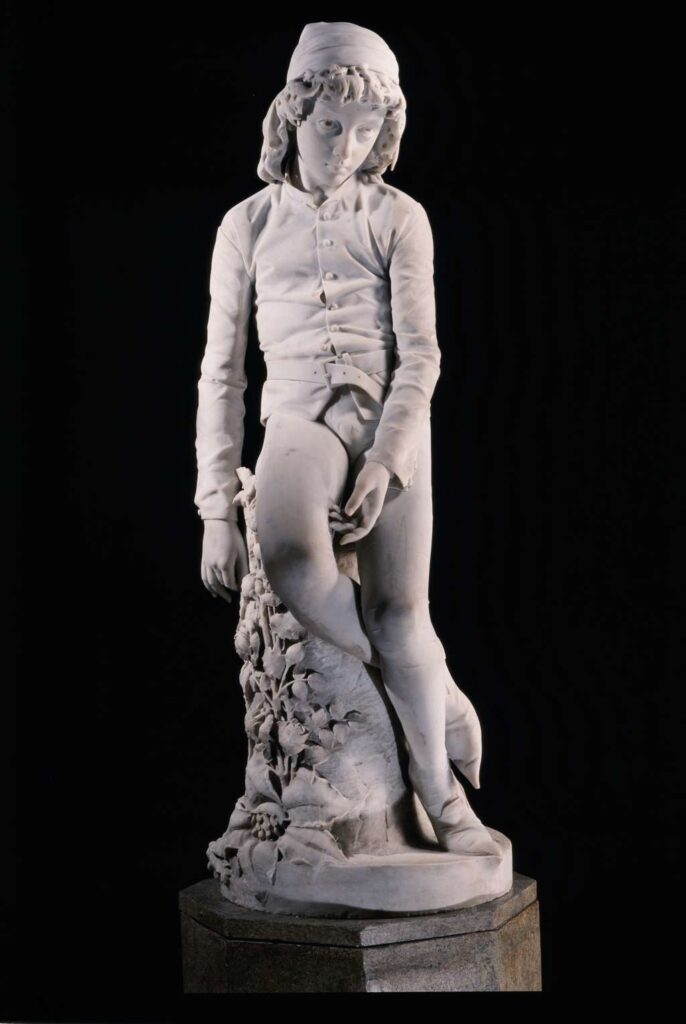
Benedetto Civiletti, Dante fanciullo (Dantino), 1875ca., marble
The Dantino (1875) by Benedetto Civiletti belongs fully to these thematic works, a child Dante who sees Beatrice for the first time, a fine and graceful sculpture all feeling and simplicity that is part of that tendency to represent famous, cultured, children or adolescents in the act of meditating on their future destiny typical of late Romanticism.
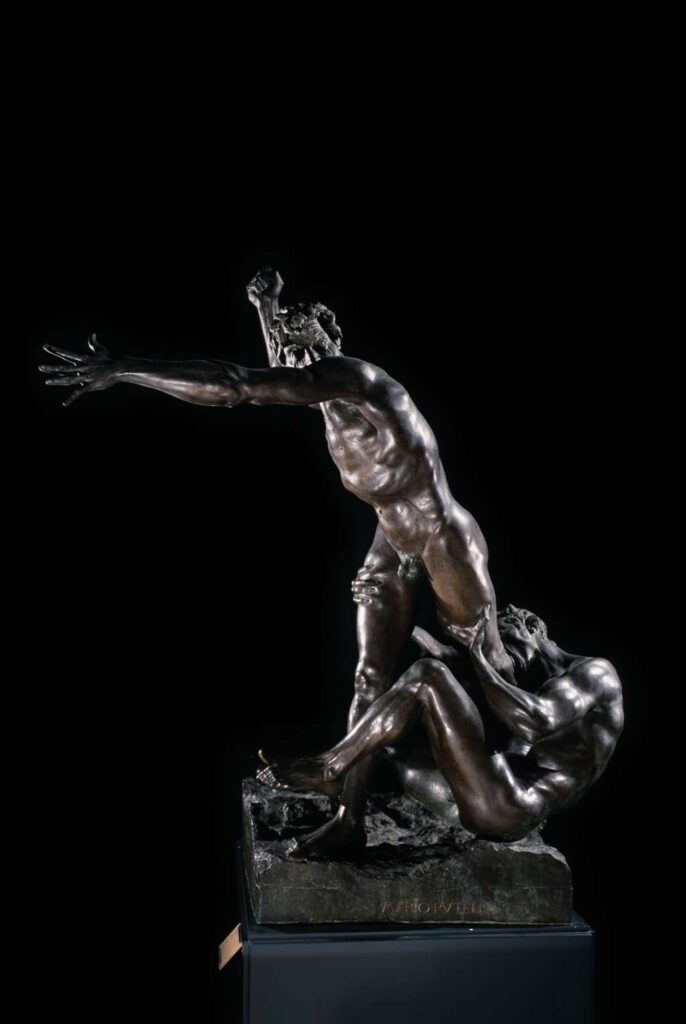
Mario Rutelli, Gli Iracondi, 1910 ca., bronze
The famous sculptural group by Mario Rutelli, Gli Iracondi (c. 1910), also refers to Dante’s universe. It represents a scene from the seventh canto of Dante’s Inferno: two damned souls in the throes of violent anger, immersed in the mud, beat each other until they tear each other to pieces. A dramatic scene of the scene in which the dynamic expressiveness of anatomies and faces make it a masterpiece and a symbol of the museum.
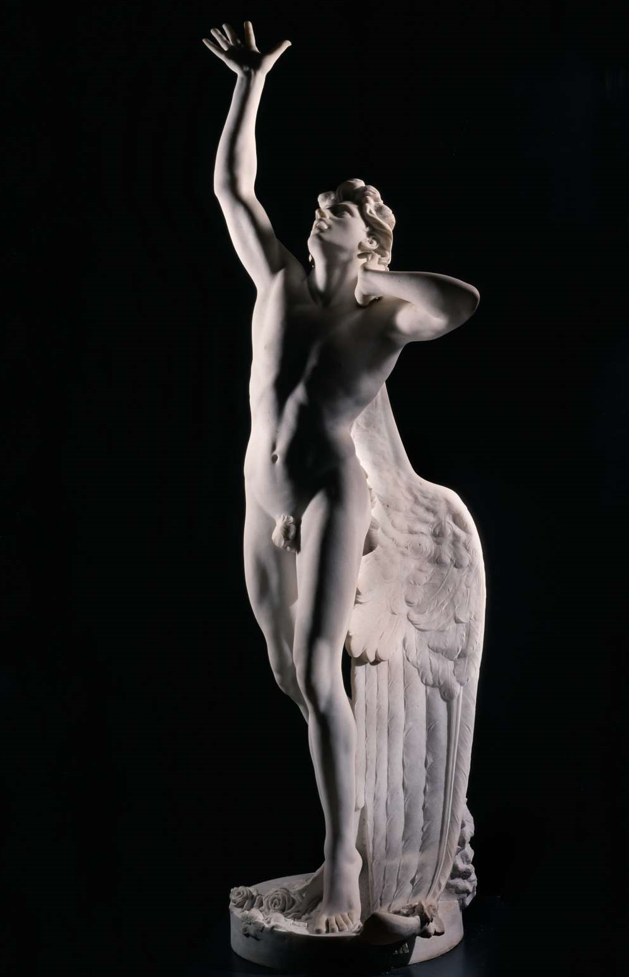
De Lisi, L’angelo di Moore (Cherubino di Moore), 1925, marble
Moore’s Angel, a marble work in 1925 by Domenico Delisi, based on the plaster model completed by his father Benedetto in January 1875, also refers to the literary world.
The theme that inspires the poem by the Irishman Thomas Moore, a friend of Byron, The Loves of Angels which tells the story of the fallen angel Rubi who fell in love with an earthly girl and the sculptor represents him in a poignant way in the his despair and weighed down by wings made of stone.
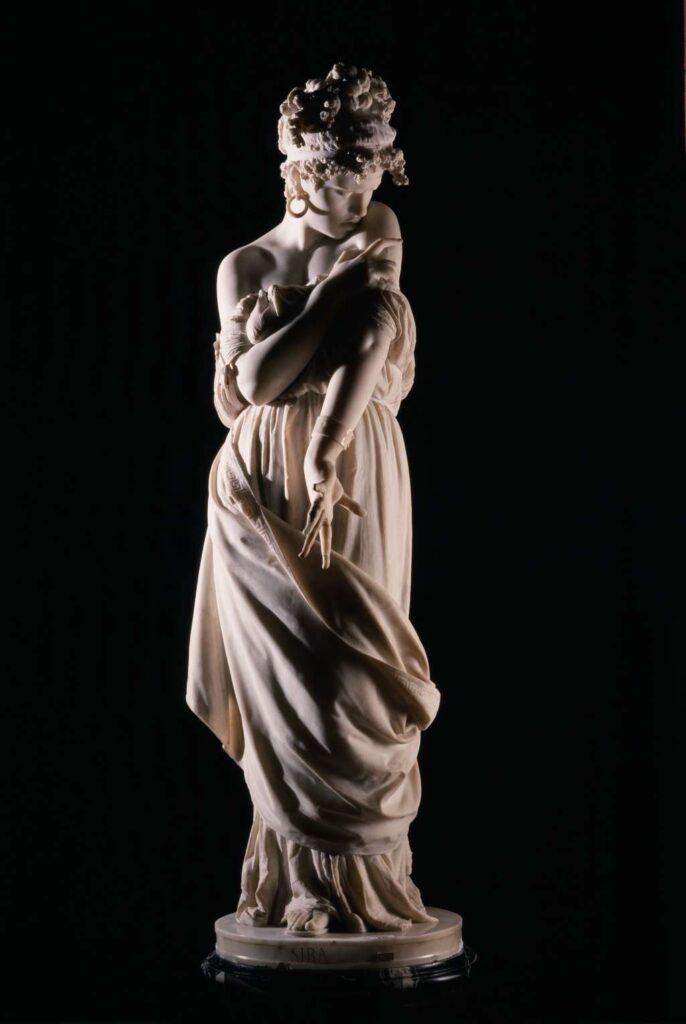
Alessandro Rondoni ,Syra (Sira), 1877, Marble
And again, for example, the Syra (1877), by Alessandro Rondoni, which represents the fascinating character of the African slave, described in the popular historical novel Fabiola by Wiseman.
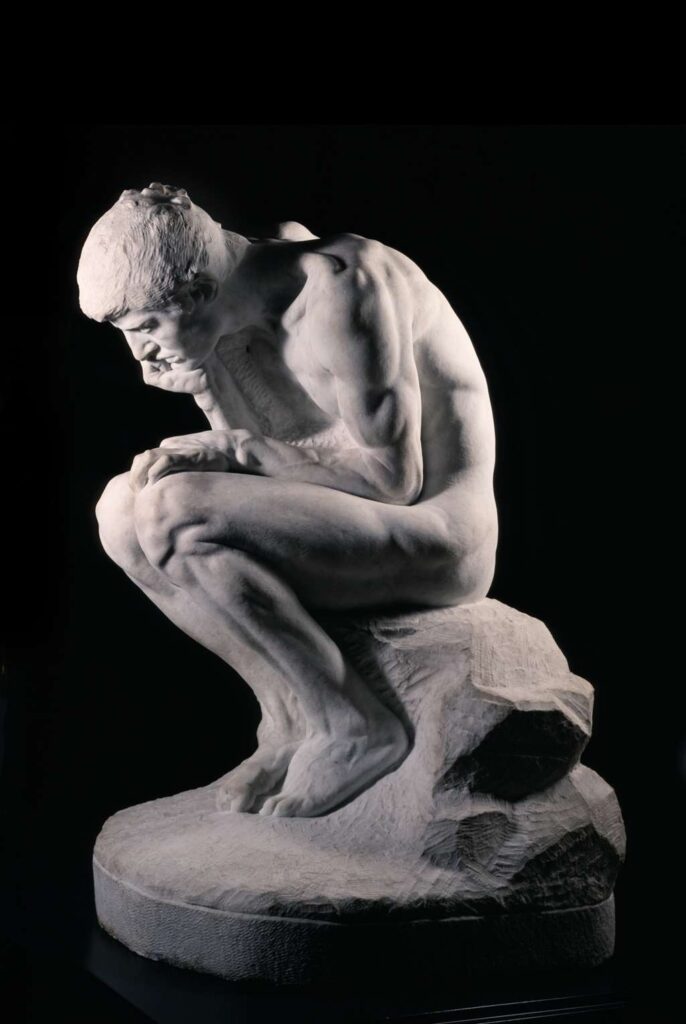
Domenico Trentacoste, Caino, Datazione incerta, marble
The sculpture by Domenico Trentacoste refers to the biblical story, a tormented Cain – of uncertain date and modeled on Rodin’s Thinker – in which the moral tension and sense of guilt for the killing of his brother are expressed very well by the position of the character and strong muscular tension: the passage from the feral to the human dimension resumes.
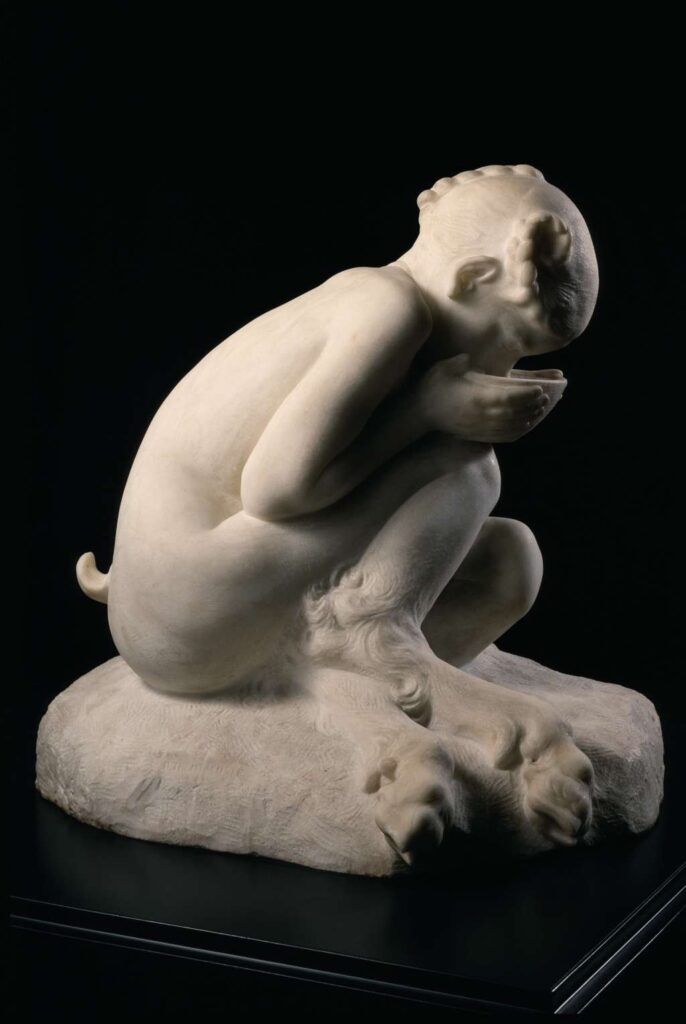
Domenico Trentacoste, Faunetta, 1910-15 circa, Marble sculpture
By the same artist and linked to an imaginary world of myth is the beautiful and admired Faunetta (1910-1915) in the woods, shown crouched while drinking a bowl of water, purchased at the Biennale, which evokes symbolist atmospheres.
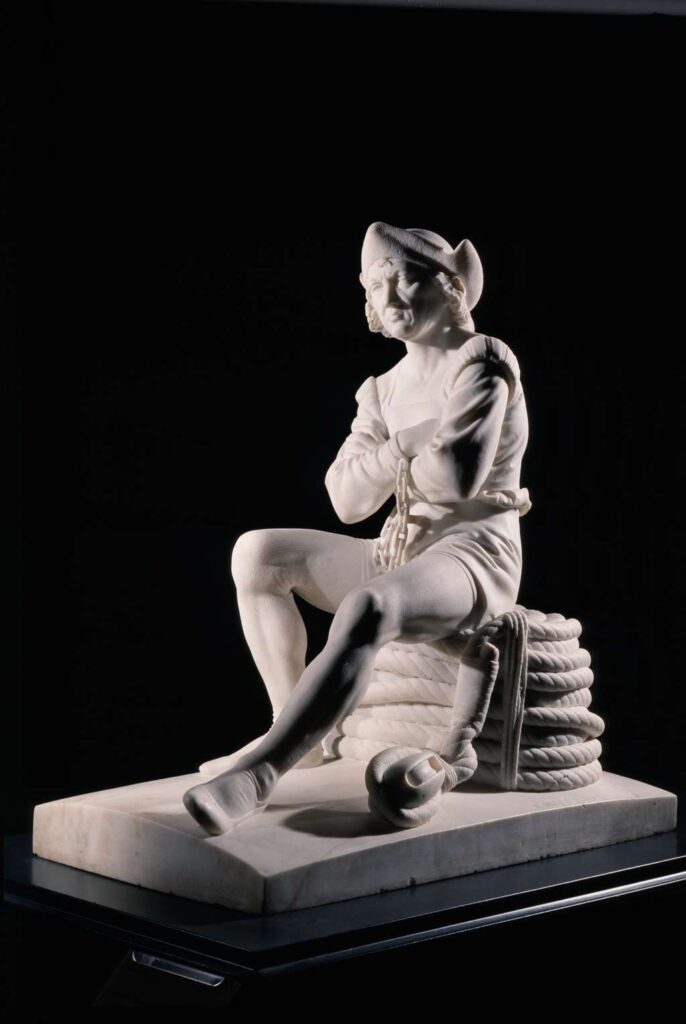
Benedetto Delisi, Cristoforo Colombo in catene, 1872, Marble
Finally, Christopher Columbus in chains (1872), reproduced while he was being taken back as a prisoner to Spain, a merciless fate that recalls that of the “hero of two worlds” and bears witness to the fortunes of Italian historical figures in the Romantic era and the construction of the myth of Giuseppe Garibaldi, in politics as in the art of that period.