
The Venice Biennale, established in 1895, was a continental point of reference for Sicilian artistic circles and for the Gallery itself, linked to this artistic event by a season of major acquisitions.
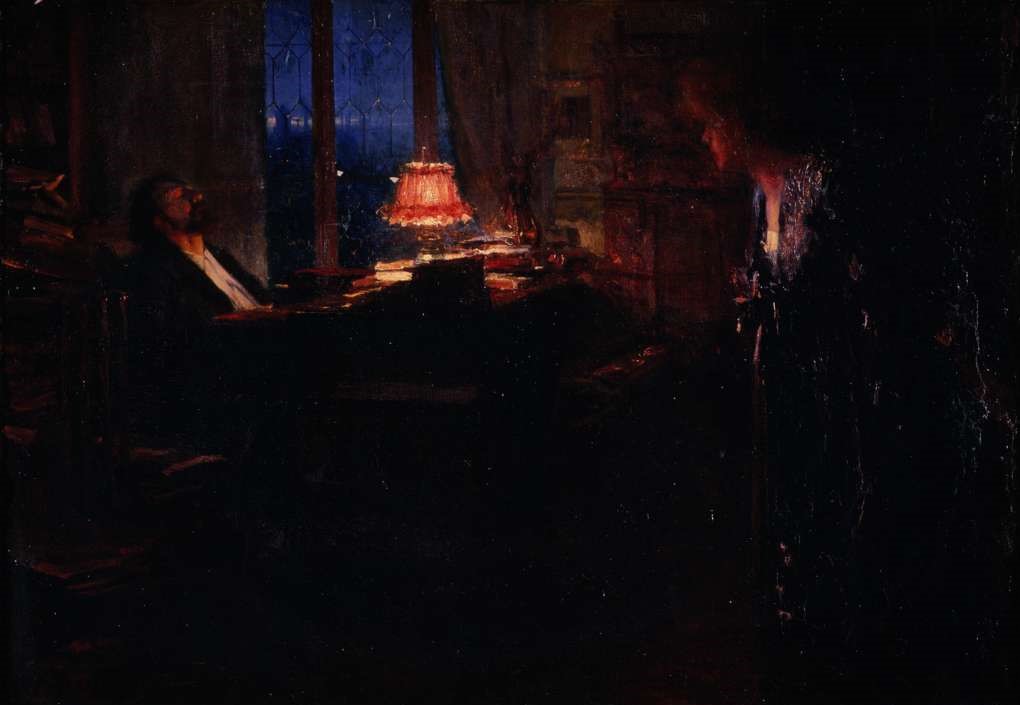
Lionello Balestrieri, La moglie del poeta, 1897, oil on canvas
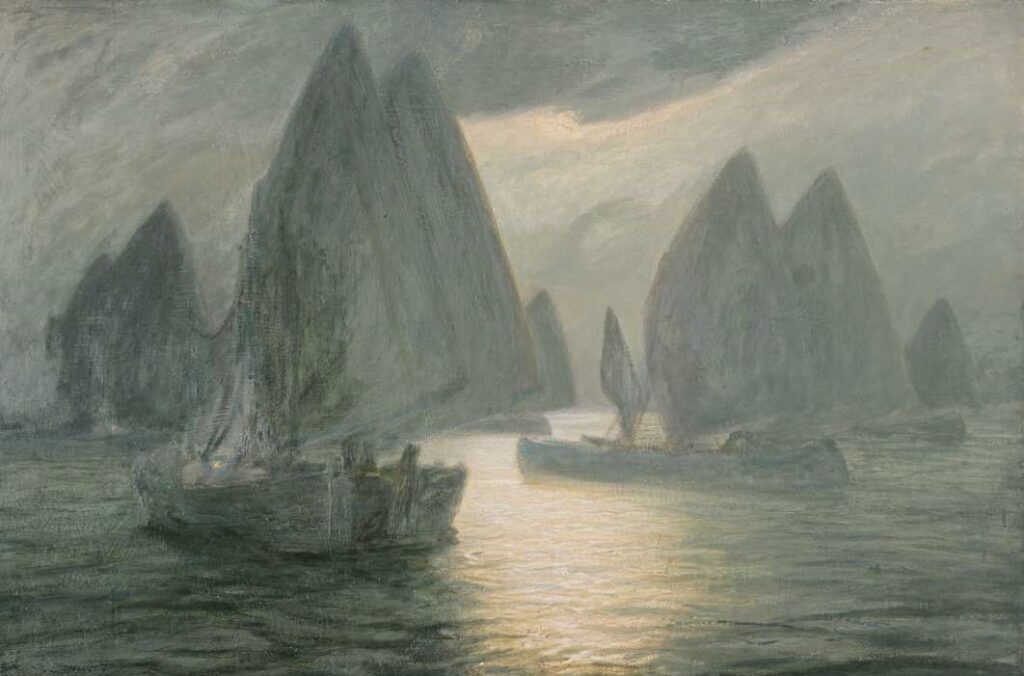
Pietro Fragiacomo, Ombre notturne, 1907 ca, oil on canvas
From the 1907 edition of the Biennale, just over a year after the decision to set up the new museum, a delegation from the Galleria d’Arte Moderna worked and managed to bring to Palermo works that tell the complex climate of the artistic culture of the early twentieth century . The purchases of works such as The poet’s wife by Lionello Balestrieri and the lagoon landscape of Fragiacomo with Shadows at night date back to this year.
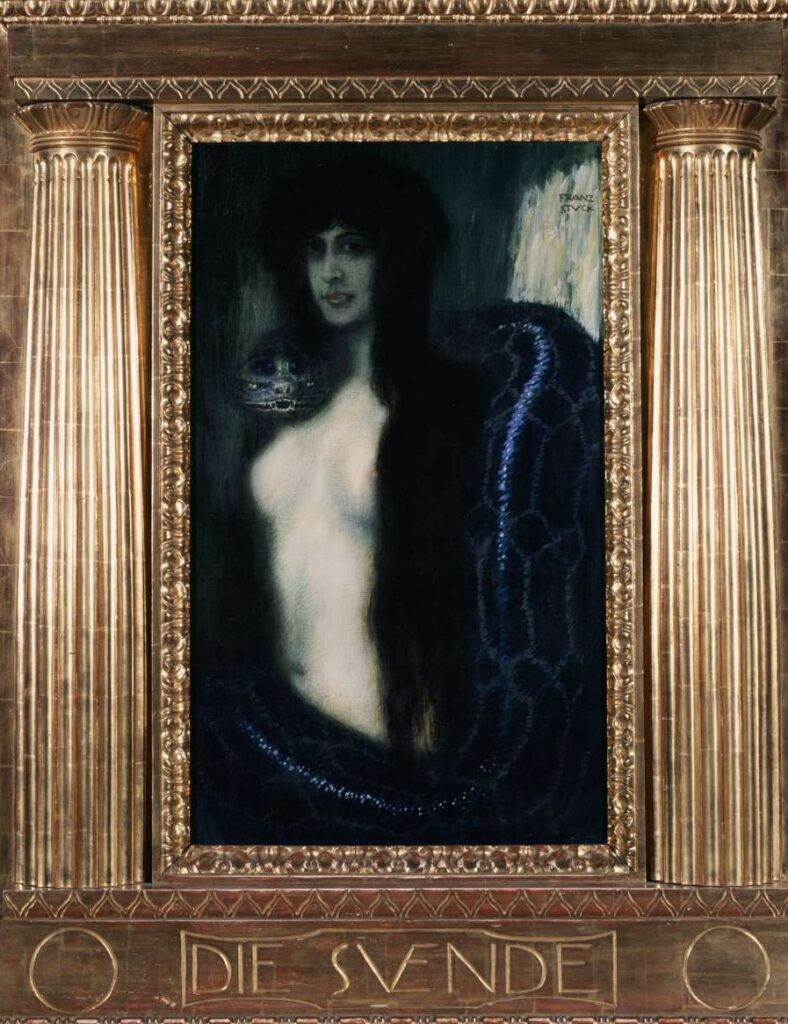
Franz Von Stuck, Il peccato, 1909 ca
Among the numerous and important works to which two rooms on the second floor of the Gallery are dedicated, the symbolist masterpiece Sin stands out, by Franz Von Stuck (one of the protagonists of the Munich Secession). A pioneer of allegorical and visionary painting with sensual atmospheres and extreme formal care, his artistic verve was characterized by a preference for certain themes, such as the conflict between Good and Evil. In fact, the work shows a modern Eve wrapped in a boa who looks at the viewer with self-confidence, restoring an image of the woman as a disturbing and dangerous creature.
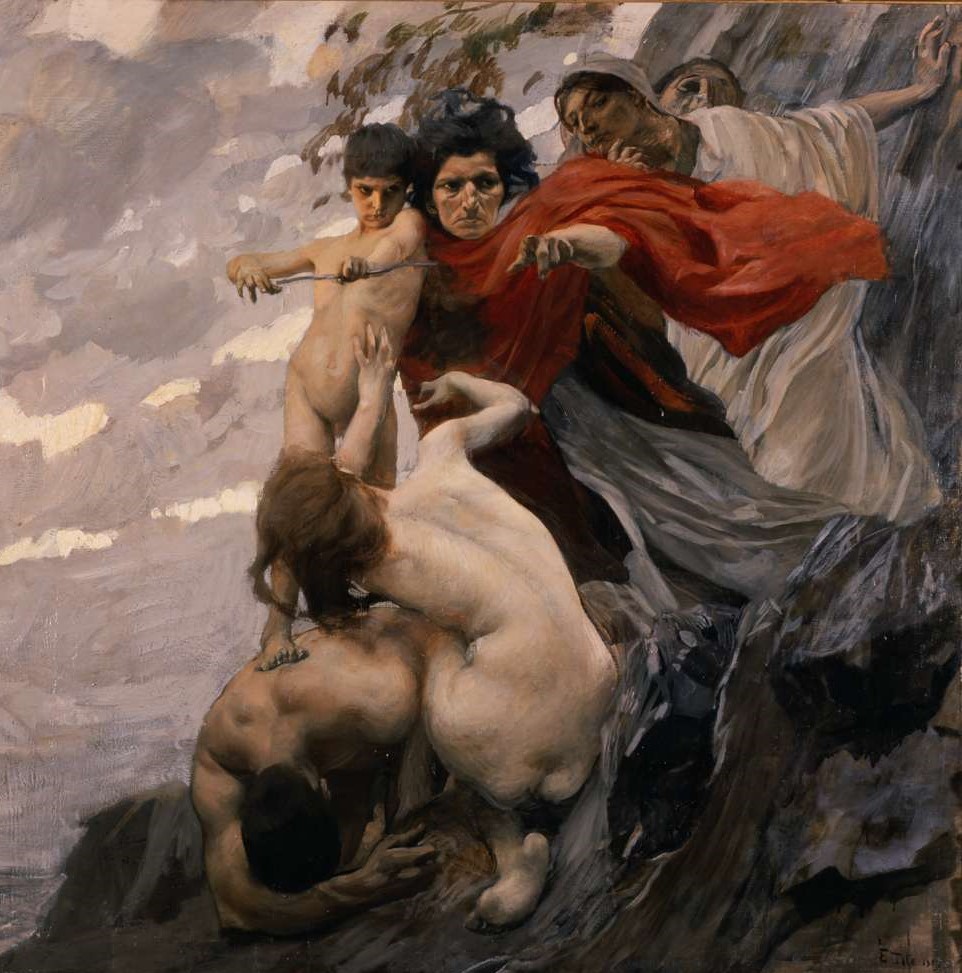
Ettore Tito, Amore e le Parche, 1909, oil on canvas
Love and Fates by Ettore Tito, a Venetian painter who at the time worked inspired by mythological themes, which he approached with a modern restlessness due to his recent studies in psychoanalysis, also refers to the symbolist atmosphere of the 1909 edition . Fates show little Eros where to shoot his next arrow, while a pair of lovers is already overcome by this feeling: a selection of themes related to reflection on destiny and individual choice.
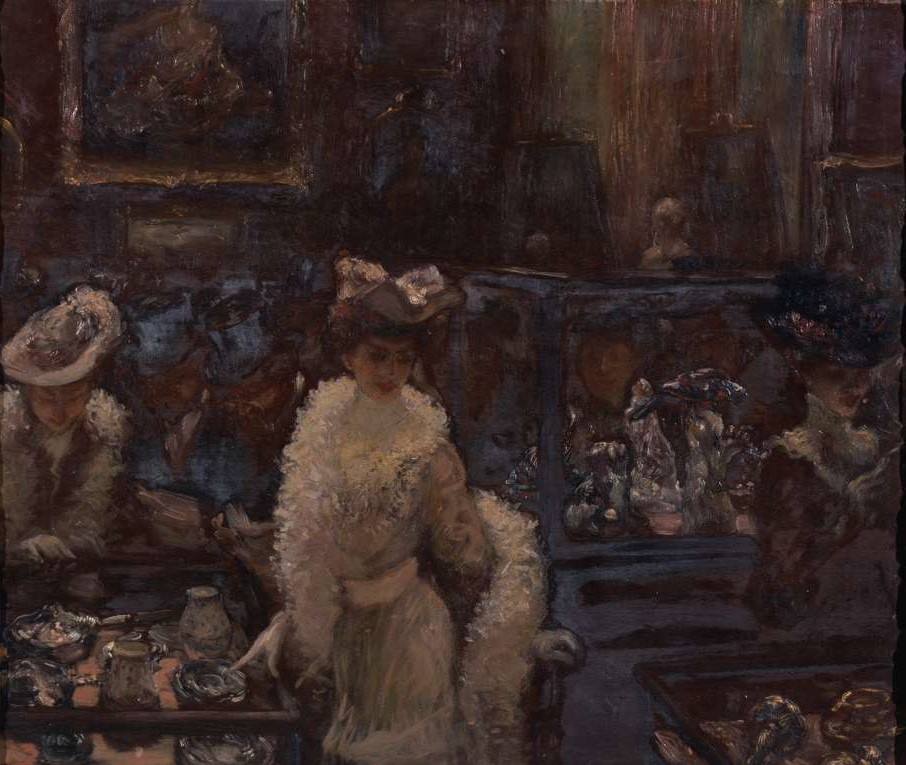
Gaston La Touche, La collezione, 1903-1907 ca, oil on canvas
The world of the belle époque refers to works such as Alla toilette by Camillo Innocenti, a Roman artist known on the Parisian scene, as well as the purchases of 1912 such as The collection of Gaston La Touche (exhibited in Paris in 1908 with the title La vente Lelong), with the elegant lady wandering around the showcases of an auction house.
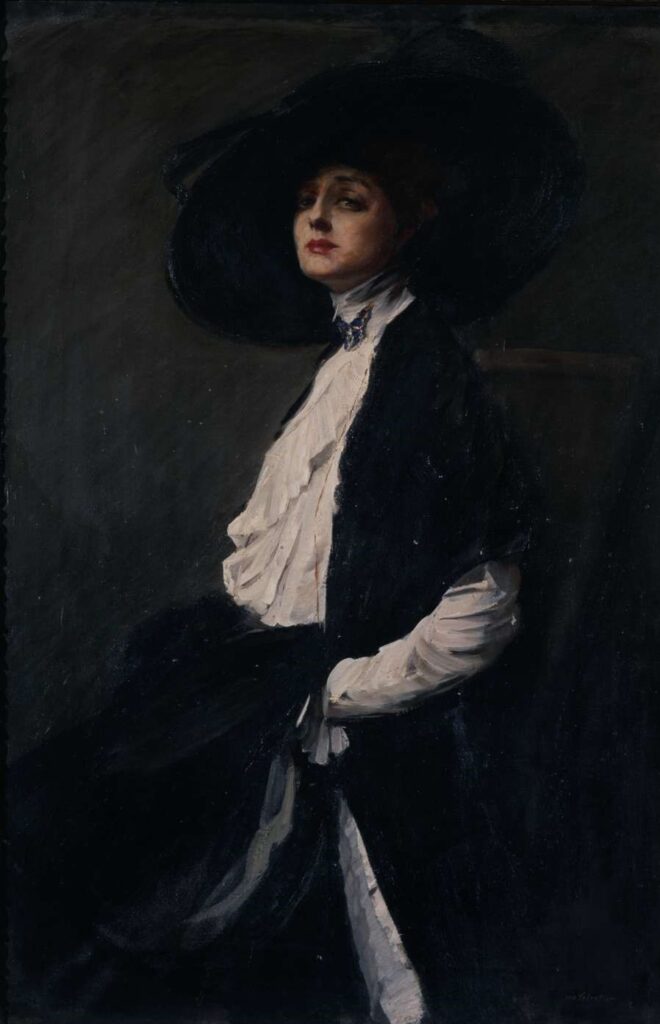
Lino Selvatico, Ritratto della signora A. C., 1912, oil on canvas
Another work is The portrait of Mrs. A.C. by Lino Selvatico, a refined depiction of a type of woman in vogue at the time, languid, bored but with an intense expression, à la Eleonora Duse.
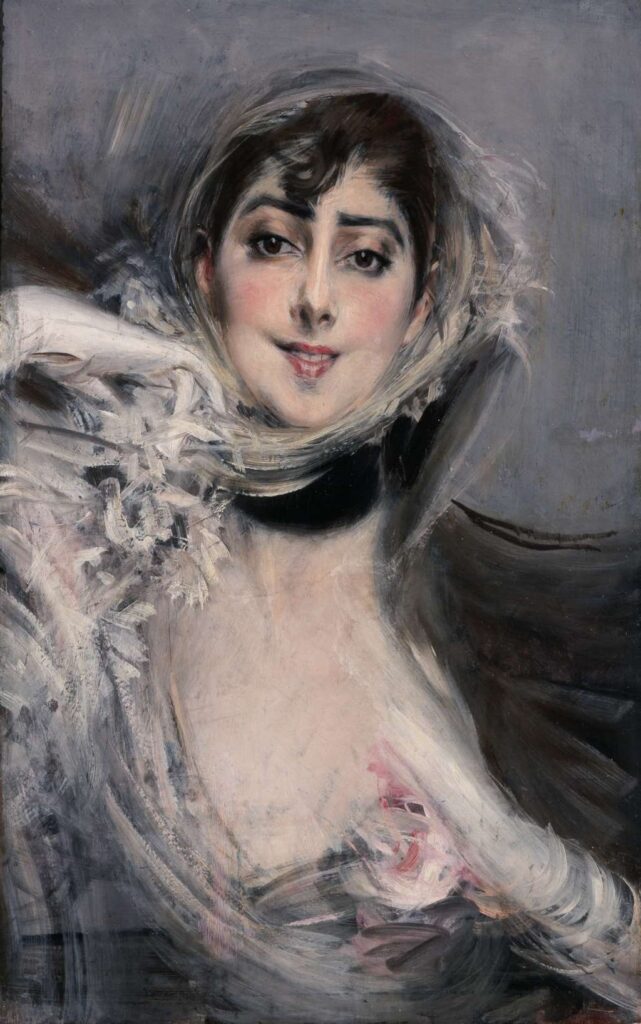
Giovanni Boldini, Femme aux gants, 1901 ca, oil on canvas
The most fervent period of purchases at the Biennale stopped around this date, with the exception of Boldini’s Femme aux gants, presented in 1932 at the artist’s retrospective exhibition organized at the XVIII Biennale. Boldini’s work is a half-length portrait of Emiliana Concha de Ossa, a young scion of the best Chilean society, which dates back to around 1901. In this period the Ferrarese artist frequented Palermo, a city where he was able to portray prominent personalities such as Antonio Starrabba, Marquis of Rudinì – twice prime minister – or Donna Franca Florio, wife of Ignazio.
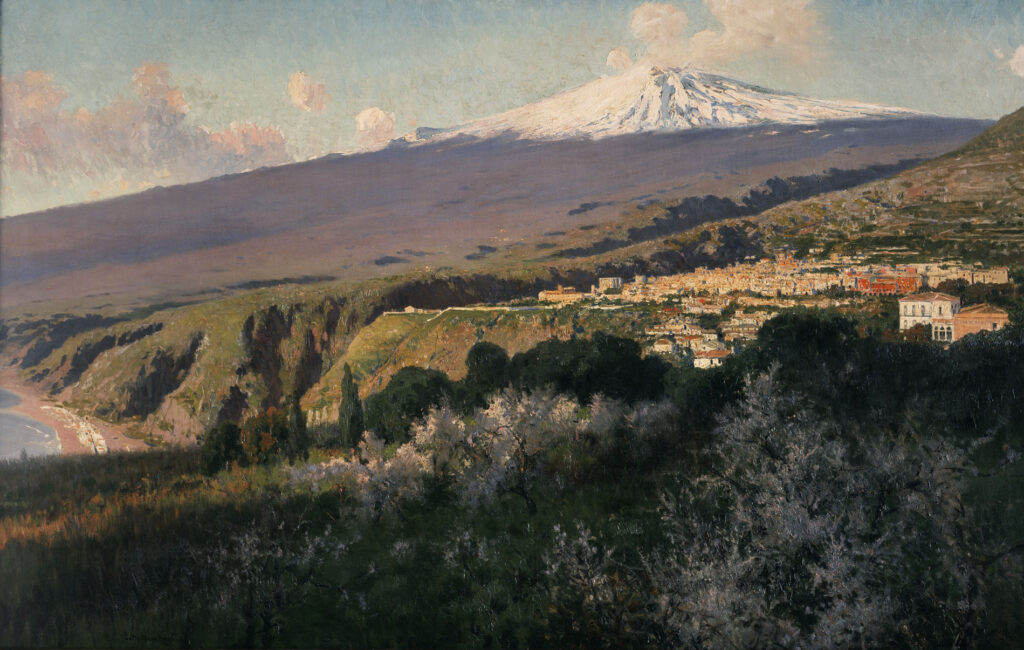
Ettore De Maria Bergler, Taormina, 1907, oil on canvas
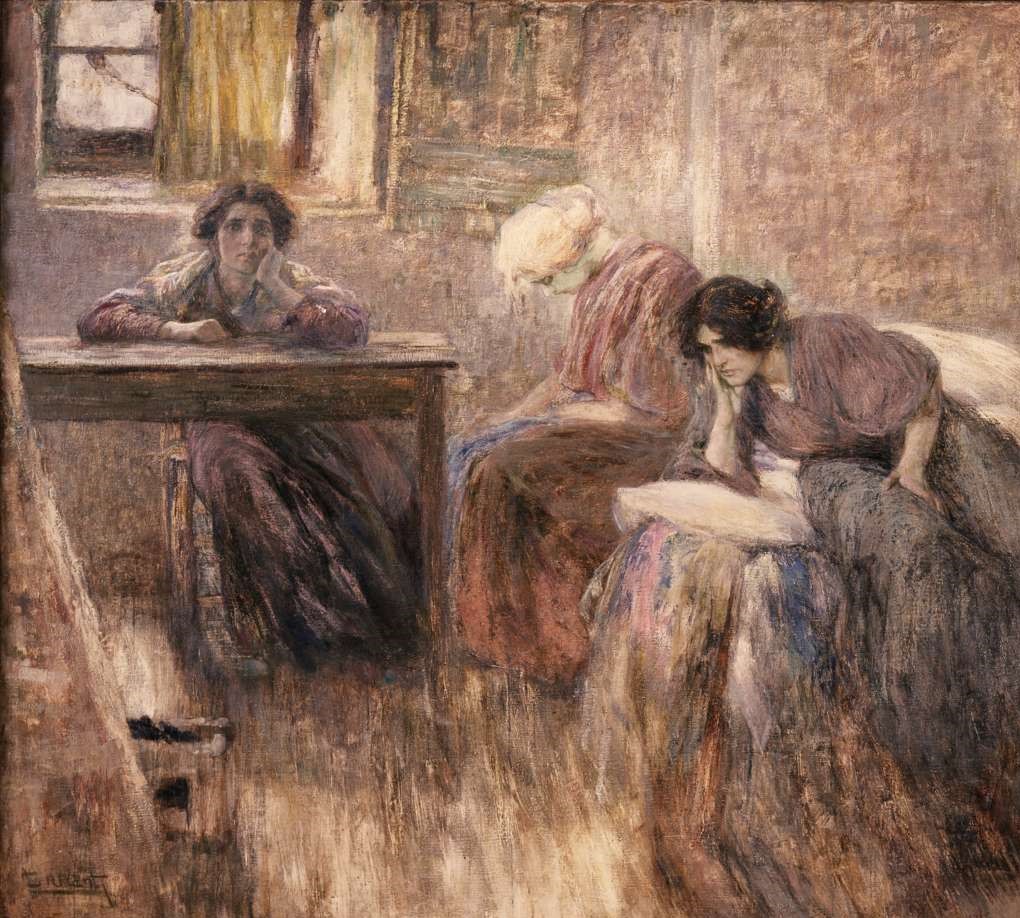
Cesare Laurenti, Dolore, 1900 ca, tempera on canvas panel
Finally, works from the Biennales from donations made by Ignazio Florio are Taormina by Ettore De Maria Bergler and Dolore by Cesare Laurenti, exhibited at the 1901 Biennale.